


47 Years at Holt & Bugbee: Phil Pierce Reflects on a Career of Growth, Leadership, and Family

When Phil Pierce joined Holt & Bugbee in 1979, he started at the ground level, learning the lumber business from the inside out. Over the next 47 years, he would help guide the company through significant growth, navigate challenging economic periods, and carry forward the family-business values that have defined Holt & Bugbee for generations.
As Phil prepares to step down as President on October 30, 2026, he sat down with Marketing Manager Ben Pierce to reflect on the experiences that shaped his career, the people who influenced his leadership, and the lessons he hopes will carry the company into its next chapter.
His story is one of family, perseverance, thoughtful growth, and a belief that the strength of a company ultimately comes down to its people.

Starting From the Ground Up
Phil's career at Holt & Bugbee began with a lesson his father, Curt, believed was essential: learn the business from the bottom up.
Before officially joining the company, Phil had already spent summers and vacations working with lumber, including sticking wood. When he began full-time in 1979, his father sent him to Memphis for a 12-week National Hardwood Lumber Association (NHLA) grading course.
After returning, Phil worked in grading and sorting lumber, checking quality coming out of the kiln and from kiln-dried suppliers. He later supervised graders, prepared lumber for inspection, and moved into inventory management.
In those early years, inventory was tracked manually using physical cards rather than computers. Every load had to be recorded and followed as it moved through air-drying and kiln-drying.
Those first few years gave Phil a practical understanding of the product, the processes, and the people behind the business. They also established a work ethic and approach to learning that would stay with him throughout his career.
One of the most important lessons came directly from his father.
“He said, ‘Make a list. Prioritize things. Start something and finish it and do a good job at it.’”
Curt taught Phil the importance of following through, focusing on priorities, and putting in the work necessary to succeed. It was advice that extended far beyond the lumber business.


Taking on Leadership and Expanding the Business
In 1990, Phil's father passed away, and the responsibilities of running the company changed almost overnight. Phil was 34 years old and became Executive Vice President, taking on many of the company's day-to-day decisions while his mother, Mary Pierce, served as President.
It was a challenging period. The economy was struggling, credit became a serious concern, and longtime customers were filing for bankruptcy. For two or three years, the company faced considerable financial pressure.
Rather than retreating, the leadership team looked for opportunities to move forward.
“Rather than saying, ‘Woe is me,’ we went on the offensive,” Phil recalled.
As conditions improved, Holt & Bugbee continued to expand. One of the first major initiatives Phil helped develop was establishing the company's Mount Braddock operation in western Pennsylvania in the early 1990s.
At the time, Holt & Bugbee was purchasing significant quantities of lumber from western Pennsylvania and Ohio, including poplar, cherry, white oak, and walnut. Processing that lumber closer to its source made practical and financial sense.
Instead of shipping green lumber to Massachusetts for processing, the company could dry, grade, and prepare it in Pennsylvania before transporting it to Tewksbury.
The decision reflected a larger principle that would guide the company's growth: recognize changes in the market and find better ways to serve customers.
That same thinking helped shape the company's expansion into Boyertown, Pennsylvania, and Elmwood Park, New Jersey. As demand grew in New York, New Jersey, and other Mid-Atlantic markets, Holt & Bugbee invested in a stronger regional presence to improve distribution and customer service.
Each location represented an opportunity to bring the company's products closer to customers while strengthening its reach across the region.
Navigating an Ever-Changing Industry
Over nearly five decades, Phil has witnessed significant changes in the hardwood industry.
When he began his career, northern red oak was in particularly high demand for its consistency and color, especially in kitchen cabinetry and interior applications. Over time, design preferences shifted toward painted finishes and alternative materials, changing the demand for certain species.
He has also seen solid hardwood become more concentrated in the high-end architectural market as customers gained access to a wider range of lower-cost alternatives.
Despite those changes, Phil remains confident in the enduring value of the company's products.
“I'm confident there will always be demand for solid hardwoods. They last longer, and there are a lot of reasons to buy them.”
His perspective reflects an understanding that the industry will continue to evolve, but quality materials and the craftsmanship they support will always have a place.
That same adaptability proved important during the financial crisis of 2007–2008 and the COVID-19 pandemic. During COVID, the company implemented a split schedule to help protect employees while continuing to pay everyone through an initial period of reduced shipments.
Phil credits the company's financial position, experience, and ability to remain levelheaded with helping it navigate the uncertainty.
“I thought the worst thing we could do was panic. My reaction was, ‘Time out. Let's catch our breath.’”
The pandemic brought unexpected changes to the market as homeowners invested in their living spaces and demand for hardwood products surged. By 2022, Phil recalled, demand had reached a level unlike anything he had experienced before.
For him, these periods reinforced the importance of preparation, patience, and making decisions with the long term in mind.

A Leadership Philosophy Built on Trust
While Phil helped guide Holt & Bugbee through expansion and economic uncertainty, his approach to leadership also evolved over time.
Growing up in the family business, he learned from three influential figures: his grandmother, his father, and his mother. Curt taught him the importance of hard work and follow-through, while Mary offered perspective on navigating difficult situations and working with people. His grandmother gave him the confidence to lead others.
As he took on more responsibility, Phil developed a collaborative leadership style. Rather than making every decision himself, he leaned on colleagues, including longtime CFO Billy Collins, his brother Roger, and his brother-in-law Jim Herlihy.
“I ran things a little more democratically,” he explained. “I leaned on them more. I distributed responsibility. Usually, we would decide as a group, and I continued that throughout my career.”
Listening became an important part of that philosophy. Phil made a conscious effort to hear people's ideas, encourage independent thinking, and give employees the opportunity to learn from mistakes.
“If you're going to get good people, let them think. That's something I feel strongly about.”
That belief in trusting people and distributing responsibility has helped shape the company's culture. It also informs how Phil thinks about the next generation of leadership.
Reflecting on what he would want future leaders to understand, he emphasized the importance of allowing people to make decisions rather than holding on to every responsibility.
“They're mature people now. You don't need to micromanage everything,” he said. “That will make for a better company going forward, rather than trying to stay in the saddle too long.”
Family at the Heart of the Business
For Phil, Holt & Bugbee has always been about more than lumber. It has been a family business in the truest sense, shaped by generations of family members and the employees who have helped build it.

His wife, Tricee, has been part of that story for nearly as long as he has. Shortly after their honeymoon in 1980, Phil's father hired her to work at the company. She went on to work alongside Phil for 46 of his 47 years at Holt & Bugbee.
Their strengths complemented each other, and Phil valued her advice, work ethic, and willingness to share her perspective. Having worked closely with Curt, Tricee also brought her own understanding of the business and played an influential role behind the scenes.
Phil's longtime friendship with Billy Collins, whom he met in college, is another example of how personal relationships have become part of the company's foundation. The two have worked together for more than 40 years.
Those relationships have reinforced what Phil considers the most important characteristic Holt & Bugbee should preserve as it continues to evolve.
“Being a family. That's the most important thing.”
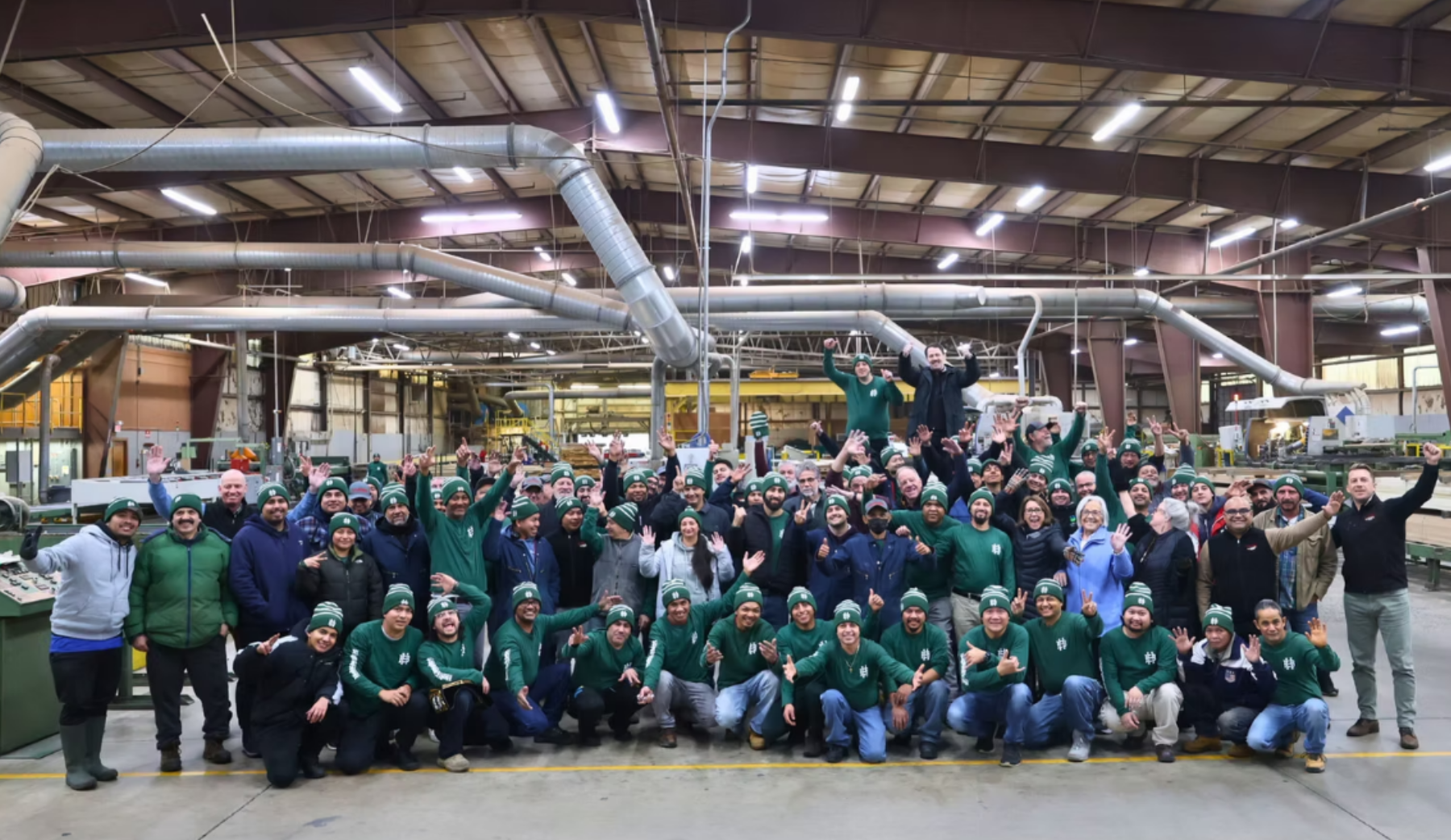
For Phil, that means treating people with respect, listening to their perspectives, and recognizing the contributions they make to the company.
When asked what he would miss most about the everyday experience of working at Holt & Bugbee, his answer was immediate.
“The people. By tenfold.”
Looking Ahead: Building on a Strong Foundation
As Holt & Bugbee continues to invest in its facilities, technology, and workforce, Phil sees meaningful opportunities ahead.
The company's modernization efforts in Tewksbury, including its new facility, represent an important investment in its operations. But Phil believes that technology and equipment are only part of the equation. Equally important is giving employees the resources, education, and support they need to succeed.
“It's pretty basic. Along with the modernization in Tewksbury, I'm most excited about how many good people we have working here.”
He points to automation, education, and employee development as important tools for helping the company continue to grow. With a strong team across its four locations and a product he believes will remain in demand, Phil feels the company is well positioned for the future.
“When I walk around now, I think that, from a personnel standpoint, across the four locations, we're in the best shape we've ever been in.”
After 47 years, Phil leaves behind a legacy shaped not by one expansion, one decision, or one period of growth, but by the people he worked alongside and the culture he helped cultivate.
When asked what he hopes people will remember about his time as President, his answer was characteristically humble.
“I'd like them to think I did a decent job. But I don't obsess about it. I don't need to have a statue out front.”
As Holt & Bugbee looks toward its next chapter, the foundation Phil helped establish remains central to its future: a commitment to quality, a willingness to evolve, and a belief that good people, given the tools to succeed, can carry the company forward for generations to come.


Comments